The heart is the most hardworking part of your body. It is a muscle that acts like a pump to send blood everywhere, from your head to your toes. To carry out this work, your heart has a very special design. Let’s see how the heart chambers help keep your body healthy.
What are the heart chambers?
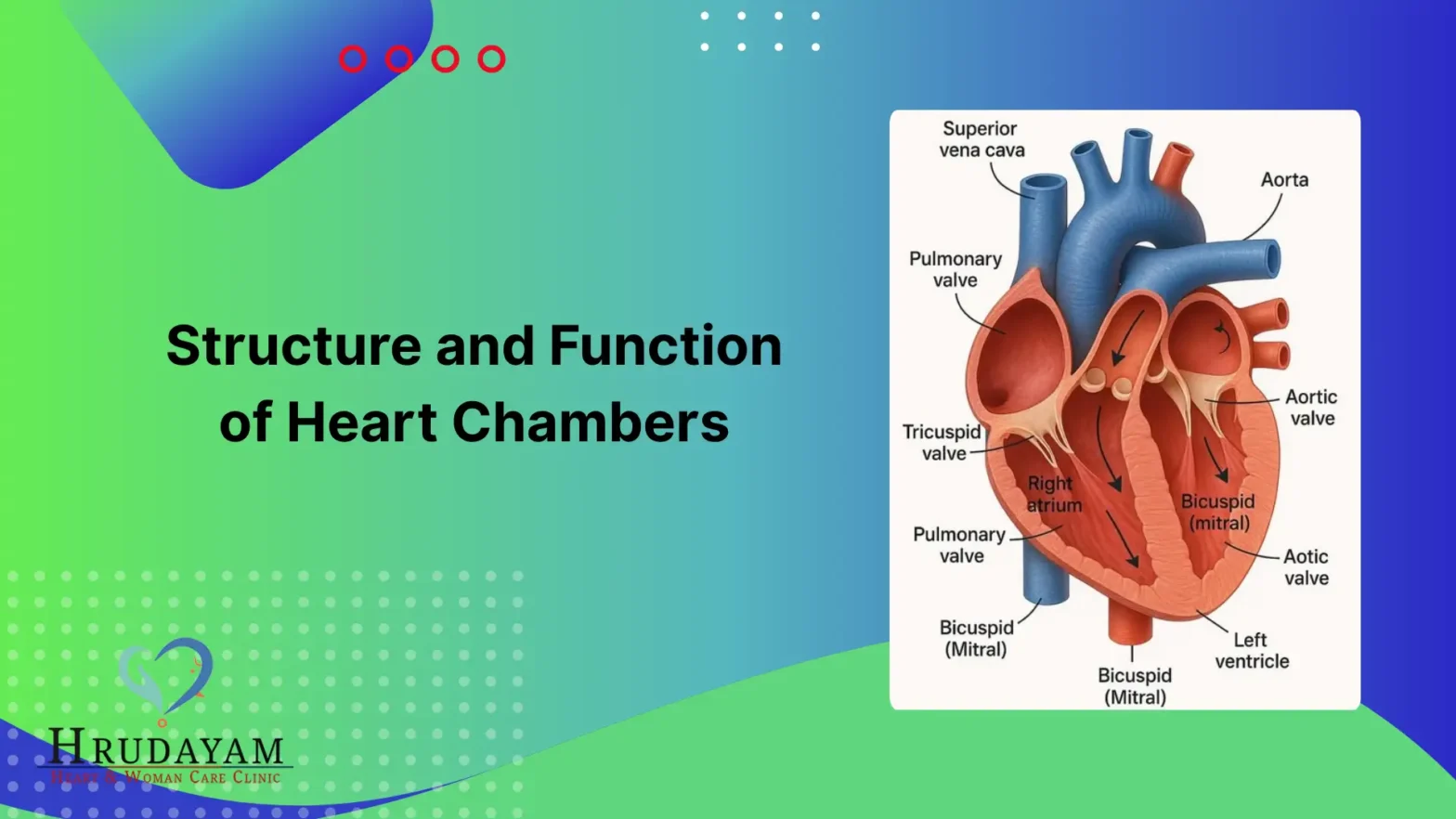
Imagine your heart is like a small house with four rooms. These “rooms” are the heart chambers. Each room is designed to perform a specific function. There are two chambers at the top and two at the bottom. They are operating together in a flawless rhythm to push blood around your body.
How Do the Heart Chambers Work?
The heart chambers work by alternating between contraction (squeezing) and relaxation in a highly coordinated sequence. The top chambers contract first to top off the lower chambers with blood. Immediately after, the lower chambers deliver a powerful squeeze to launch that blood out of the heart. This continuous squeeze-and-release cycle is what creates your heartbeat and keeps your blood moving around the clock.
What Is the Anatomic Structure of Heart Chambers?
The structure of heart is designed for one-way traffic. These “doors” between the chambers are called valves. They function by opening during the passage of blood and closing immediately thereafter to prevent the backward flow. The left and right sides are separated by a thick wall called the septum, which prevents oxygen-rich and oxygen-poor blood from mixing.
4 chambers of the heart
1. Right atrium
The right atrium is the upper chamber that you will find on the right side of the heart. It mainly serves as a receiving area for the deoxygenated blood that comes back from the body tissues. Since this blood has given its oxygen to the cells, the color tends to be dark red or sometimes bluish.
2. Left atrium
It is located in the upper chamber of the heart, on the left side. In fact, it is responsible for bringing in new oxygen-rich blood that is coming back from the lungs. The blood is in a bright red color, as it has been fully loaded with oxygen and it is ready to support your organs. When the left atrium is full, it releases this newly oxygenated blood into the lower left chamber.
3. Right ventricle
The right ventricle is the lower chamber on the right side of the heart. It gets the oxygen-poor blood directly from the right atrium above it. Through a strong, targeted muscular contraction, it pumps this blood through the pulmonary artery to the lungs. There, the blood gets rid of carbon dioxide and picks up oxygen.
Left ventricle
Located in the lower left chamber, the left ventricle is the one that is done with the most work and hence has the most muscles. It receives the oxygen-rich blood from the left atrium and sets it up for a long trip. Its walls are very thick and strong because it has to produce a body that is powerful enough to pump the blood even to the brain and toes.
Functions of heart Chambers
The function of heart chambers relies on specific individual tasks that satisfy the 3 main functions heart systems must achieve to keep you alive:
- Receiving Used Blood: The right-side chambers isolate and collect depleted, oxygen-poor blood from the body and route it directly to the lungs for a fresh refill.
- Reoxygenating and Pressurizing: The heart coordinates chamber pressures to move blood smoothly through the lungs without backward leakage, ensuring efficient gas exchange.
- Distributing Nourishment: The left-side chambers capture the newly oxygenated blood and generate high-pressure systemic circulation to deliver oxygen and nutrients to every living cell.
Signs and Symptoms of Heart Problems Related to the Chambers
When structural or functional issues alter how these chambers handle blood, your body will rapidly send warning signals:
- Shortness of breath, especially during physical activity or while lying flat in bed.
- Chronic, unexplained fatigue and physical weakness because tissues lack proper oxygen.
- Swelling (edema) in your legs, ankles, feet, or abdomen caused by blood backing up in the veins.
- Rapid, fluttering, or palpitations (irregular heartbeats) indicating chamber rhythm distress.
- Dizziness, lightheadedness, or sudden fainting spells due to drops in blood pressure.
Health Problems That Affect the Heart Chambers
Various cardiovascular disorders can alter the internal dimensions, electrical wiring, or tissue health of your heart walls.
1. Arrhythmias
Arrhythmias are electrical glitches where the chambers beat too fast, too slow, or completely out of order, disrupting normal pumping coordination.
2. Heart valve disease
This condition occurs when the internal doors (valves) between the chambers become stiff, narrow, or leaky, forcing the muscle walls to work twice as hard.
3. Endocarditis
Endocarditis is a dangerous bacterial or fungal infection that targets the smooth inner lining and valves of the heart chambers.
4. Single ventricle defects
These are severe congenital heart conditions where a child is born with only one fully functioning lower pumping chamber instead of two.
Prevent Heart Problems by Caring for Your Heart Chambers
You can take measures to ensure that your cardiac muscles are not stretched, weakened, or enlarged by making sure that you have good cardiovascular practices such as the following:
- Control your blood pressure and cholesterol in order to lessen the amount of strain on the walls of the chambers.
- Perform regular cardiovascular exercise to make your cardiac muscles more flexible and efficient in terms of volume.
- Eat healthy food that does not have high sodium content and saturated fats to avoid plaque formation in the arteries.
How do I know if my heart chambers are healthy?
Consulting a medical professional is the most reliable method. To hear your heartbeat, they might use a stethoscope. Additionally, they could employ an ‘ECHO Test‘ that is essentially a heart ultrasound and can show the chambers in motion.
The Importance of Regular Checkups for Heart Health
Scheduling regular clinical evaluations allows your doctor to detect subtle variations in chamber pressure, muscle thickness, and electrical pathways long before you feel sick. Early interventions through routine screenings can prevent minor structural strains from developing into irreversible cardiac damage.
What lifestyle changes can I make to keep my heart chambers healthy?
Support your heart by making simple, healthy choices:
- Walk, dance, or play outside to keep your heart muscle strong.
- Eat colorful fruits and vegetables, as they provide the right kind of fuel for your heart.
- Try to relax by doing deep breathing exercises and getting enough sleep. This will allow your heart to rest.
Conclusion
The chambers of your heart are truly the power engine for your life. They keep going without rest to keep you alive. Structural modifications or rhythm irregularities will interfere with these vital spaces. Therefore, expert advice should be sought. That is, if you are in need of advanced cardiovascular care. Then a visit to a cardiologist in Nagpur will get you accurate diagnostics and a treatment plan that meets your individual needs.
In the case of specialized heart conditions such as complicated arrhythmias or the heart’s inability to pump blood, consulting the top cardiologist in Nagpur, like Dr. Chetan Rathi, can be a turning point. Being a highly respected interventional cardiologist and passionate electrophysiologist, he blends the most advanced clinical results with the profound understanding of the patient to maintain the power, durability, and perfect coordination of your heart chambers.
FAQ’s of 4 Chambers of the Heart
How does congestive heart failure affect the heart chambers?
In congestive heart failure, the muscle walls of the chambers either become too weak to pump blood efficiently or too stiff to fill up properly. This causes blood to back up into other areas of the body, leading to fluid accumulation in the lungs and limbs.
How Blood Flows Through the Heart
Blood follows a strict circuit through the 4 chambers of the heart:
- Oxygen-poor blood enters the right atrium from the body.
- It flows down into the right ventricle, which pumps it into the lungs to get oxygen.
- Freshly oxygenated blood returns from the lungs into the left atrium.
- It moves into the powerful left ventricle, which shoots it out to the rest of the body.
Where are the heart chambers located?
The heart is safely nestled in your chest, right behind your breastbone and a little bit towards the left. The chambers are located within the walls of the heart, guarded by your ribs.
What are the heart chambers made of?
Cardiac muscle, a specialised form of muscle, constitutes the chambers. Quite remarkably, this type of muscle never gets tired. Moreover, the interior of the chambers is lined very smoothly so that the blood flows without any resistance or getting lodged.
Why Is the Left Ventricle the Strongest Chamber?
The left ventricle is responsible for the transfer of blood to far-away parts such as your brain and feet. Therefore, it needs extra strength, making the muscle stronger than the others.
What Happens If Heart Chambers Are Damaged?
If the chambers are damaged, you can experience fatigue or shortness of breath since your body is not getting sufficient oxygen.
How Do the Heart Chambers Work Together?
They coordinate like a team. While the upper chambers are filling, the lower chambers are pumping. Their timing is so well coordinated that this process happens every second.
